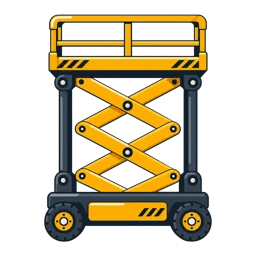
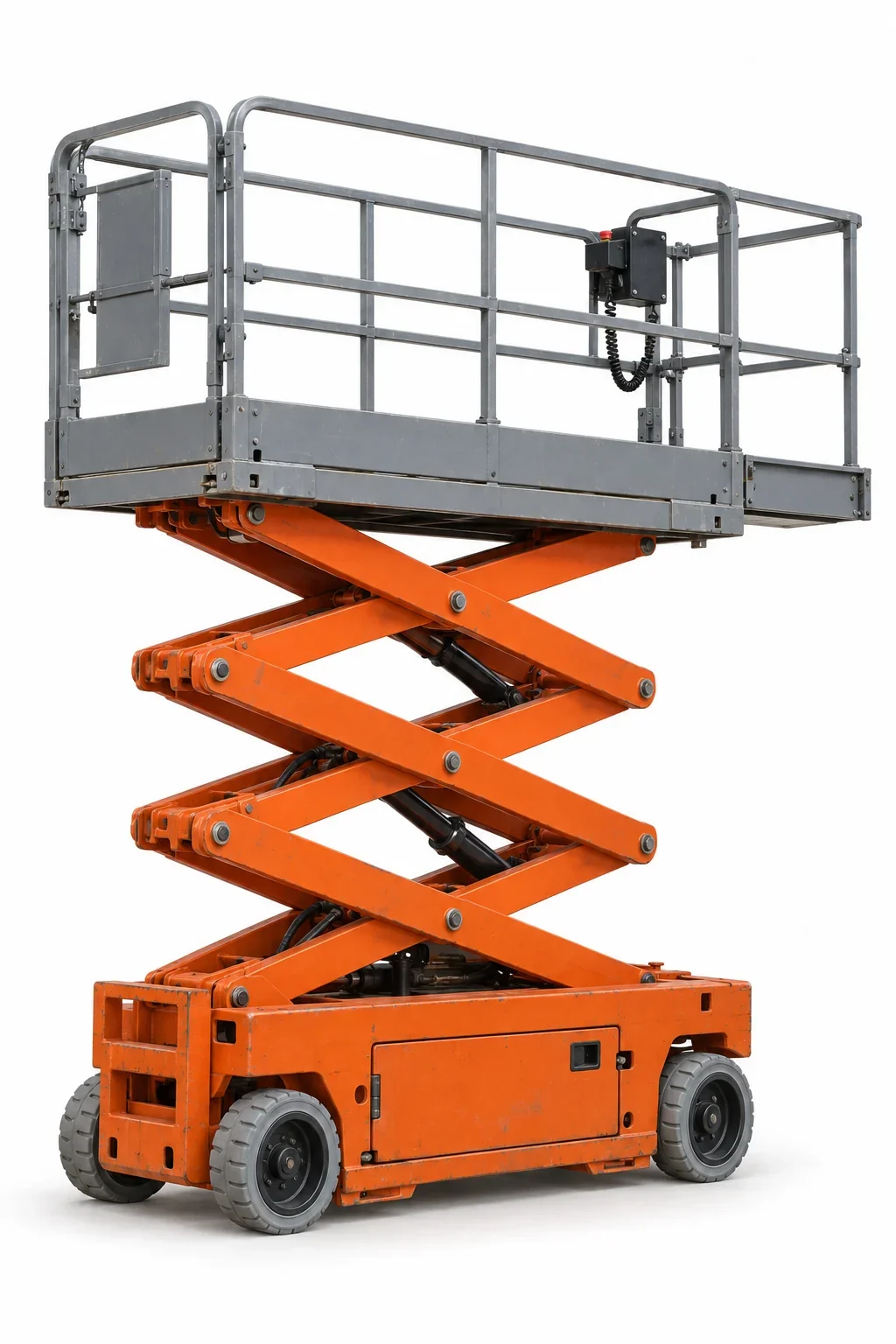
Geometry on slab floors
- Directly-overhead tasks favor electric scissor lifts. Measure the true working height, then confirm platform height requirements and clearance for guardrails.
- Aisle and doorway limits inside logistics spaces push choices toward narrow-frame units. Check turning radius for end-of-aisle pivots near racking.
Local runtime considerations
- The regional climate’s summer heat can shorten effective battery windows and extend charge recovery. For multi-shift work, factor in charging plans and ventilation areas.
- Dust near loading docks and material transfer zones can collect in components, influencing maintenance intervals. Keeping units on smoother indoor routes helps preserve uptime.
Sizing the platform
- Wider decks speed fixture installs but may exceed aisle widths. Smaller platforms fit service corridors but reduce material staging.
- Guardrail height and ceiling obstructions—sprinkler lines, cable trays, and ductwork—govern safe working position. Actual conditions and the unit’s instructions set limits.
When a scissor isn’t enough
If the task requires reaching over conveyors, mezzanines, or machinery, scissor lifts may not clear the offset. Compare boom options at /aerial-lift-rental/ or go directly to /boom-lift-rental/ for articulating choices that work around obstacles.
Bakersfield use cases
- High-bay maintenance in modern distribution buildings
- Signage and lighting changes in commercial spaces
- Commissioning work after tenant improvements on slab floors
Related rentals
- For outdoor or uneven pads, see /rough-terrain-scissor-lift-rental/.
- Material support in receiving areas may need /forklift-rental/.