Site conditions first
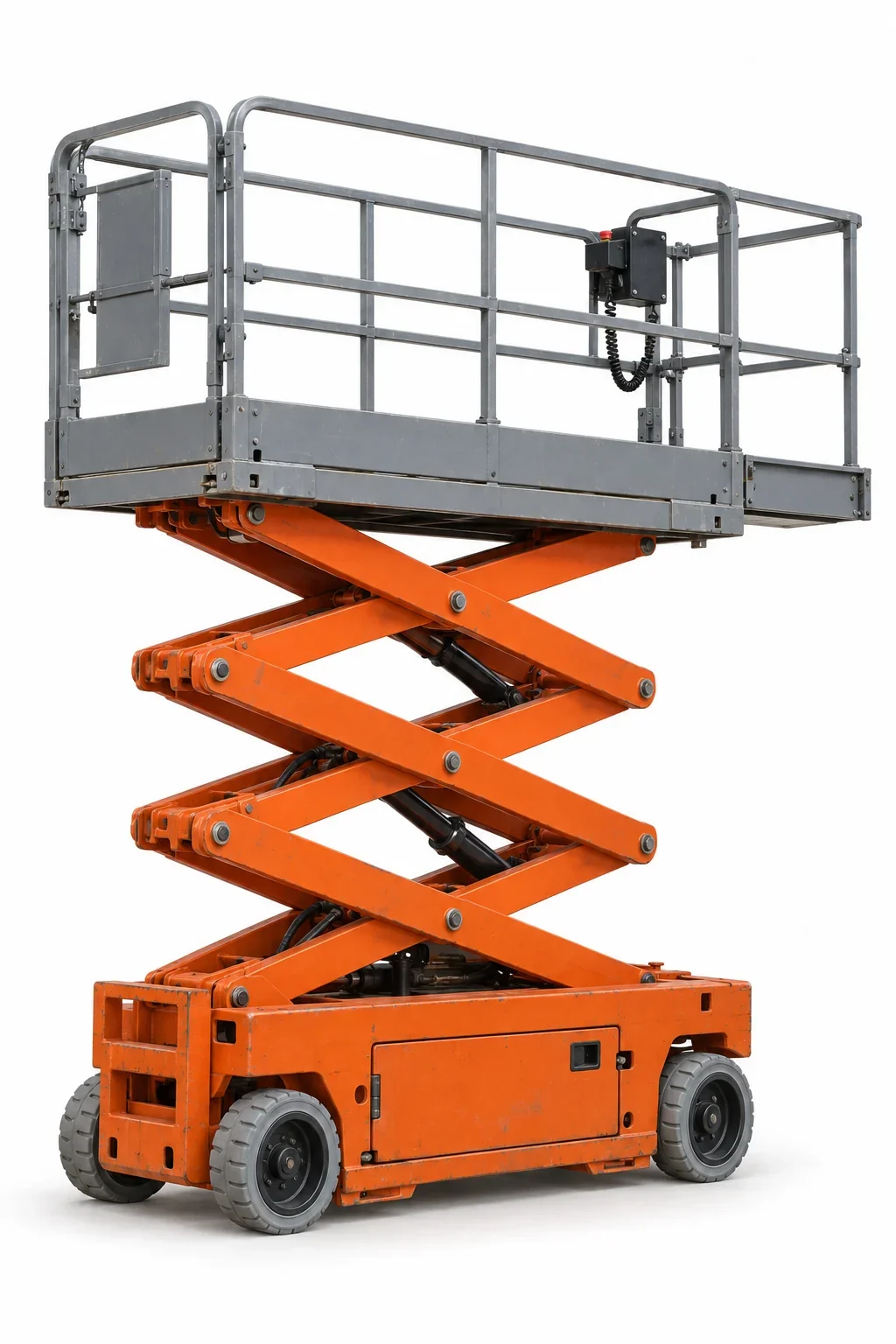
- Unfinished surfaces and utility cutouts are common on exterior work around new commercial and industrial builds. Ground variability points to rough-terrain scissors with higher clearance.
- Wind exposure increases outside. Actual conditions, the selected unit’s instructions, and site procedures govern acceptable operating limits.
Geometry and clearance
- If the task sits directly overhead—facade panels, signage, or conduit runs—a rough-terrain scissor provides straight-up access with a larger platform for materials.
- If the machine cannot sit under the work due to setbacks, fencing, or equipment, consider booms at /boom-lift-rental/ with outreach.
Bakersfield-specific factors
- Dust and debris on perimeter lots may collect in components, shaping maintenance cadence.
- Heat in the regional climate affects engine cooling and, for hybrid or electric models, battery performance windows.
Platform planning
- Wider decks benefit cladding and multi-trade tasks but require more staging space. Check truck access, laydown areas, and turnaround paths.
- Guardrail height and overhead obstructions at canopies or low eaves can constrain workable positions.
Complementary equipment
- For true up-and-over reach, compare /aerial-lift-rental/ options.
- Material placement on exterior pads may be faster with /telehandler-rental/.
Keep the comparison specific
A useful equipment discussion starts with the work height, the practical machine position, the route into the area, the floor or ground along that route, and the people, tools, or material involved. Those details clarify whether vertical access, outreach, or material placement is the real constraint.