Decide by task position and height
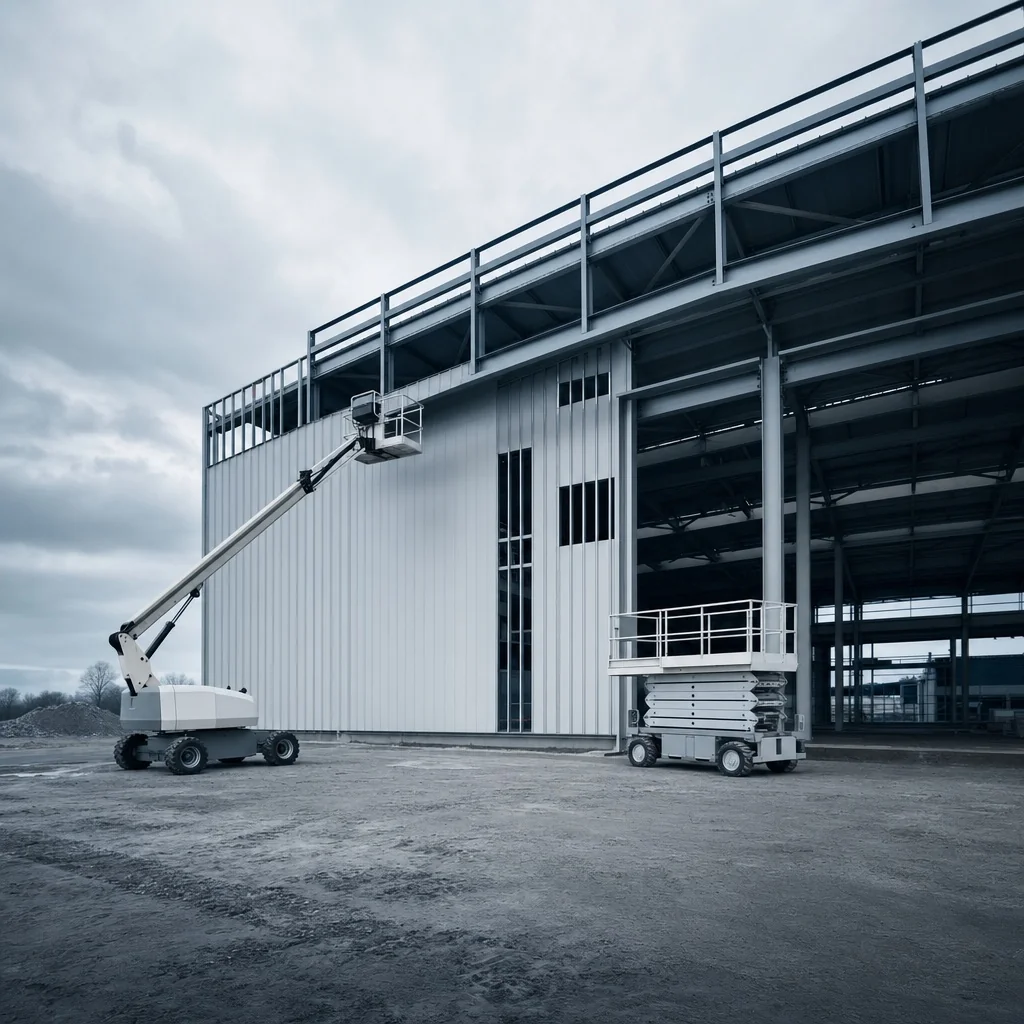
- Straight-up access on smooth slab: Electric scissor lifts and vertical mast lifts fit high-bay racking, lighting, and MEP drops in local distribution buildings.
- Up-and-over around obstructions: Use articulating boom lifts to navigate around conveyors or mezzanine edges.
- Long horizontal reach outdoors: Telescopic boom lifts handle facade work and yard-side maintenance.
Surface and route considerations
- Smooth interior slab: Non-marking tires and compact footprints reduce aisle conflicts.
- Mixed exterior yards: For compacted base or transitions, compare rough-terrain scissor lifts or boom lifts that tolerate minor irregularities.
- Route: Confirm door widths, ramp slopes, and dock congestion. Night-shift logistics patterns can limit move windows.
Heat and dust effects
- Heat: Elevated temperatures influence battery charge windows for electric lifts. Plan charging away from peak heat to maintain performance.
- Dust: Increased filter attention keeps combustion units and site products reliable, especially near outdoor staging and industrial work.
Load and platform space
- Platform work: High-bay installs may need wider platforms on scissors for materials and fixtures.
- Material handling: Pair lifts with forklifts or telehandlers to shuttle pallets from containers to interior bays.
Site products that complete the plan
- Generators and light towers: Night work and interior phases benefit from quiet power and directed lighting along lift aisles.
- Storage containers: Stage tools and racking components close to dock doors to cut travel.
- Temporary fencing and barricades: Define safe routes between active trucking lanes and lift aisles.
When conditions govern
Actual site conditions, the selected unit’s instructions, and facility procedures control how elevated or exterior work proceeds. Confirm clearances, wind exposure, and surface capacity before finalizing equipment.